


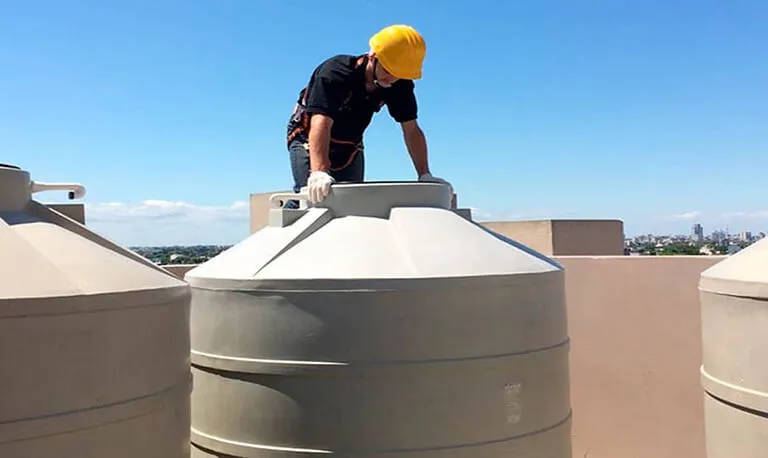
I know how important clean and safe water is for every home and business in Dubai. But over time, water tanks collect dirt, sediment, and bacteria. If left uncleaned, these can make the water unsafe and cause serious health problems. That’s why regular tank cleaning and disinfection is a must.
The hot and humid weather makes things worse. Stagnant water becomes a breeding ground for bacteria. To prevent this, tank cleaning helps keep your drinking and utility water safe. The Dubai Municipality has strict rules to ensure water tank disinfection is done regularly.
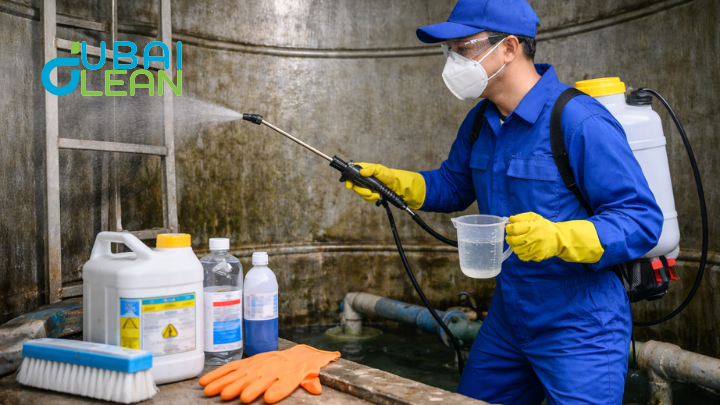
Chemicals and Kits You Need to Clean a Drinking Water Tank
Cleaning a water tank properly means using the right chemicals and tools. Professionals rely on safe, approved products to remove bacteria, dirt, and other contaminants. It’s important to use drinking water-safe chemicals that don’t leave harmful residues or bad smells. Here’s what’s needed for the job:
1. Safe Disinfection Chemicals
Municipality approves certain disinfectants to kill bacteria, viruses, and algae in water tanks. The most commonly used ones are:
- Chlorine-based disinfectants – Sodium hypochlorite (liquid bleach) and calcium hypochlorite tablets are highly effective at killing germs.
- Hydrogen peroxide solution – A great alternative to chlorine, as it disinfects without leaving behind harmful residues.
- Food-grade biocides – Non-toxic disinfectants that kill bacteria while keeping the water safe to drink.
- Vinegar and baking soda – A natural option for small-scale cleaning, great for removing stains and mild sediment buildup.
2. Water Tank Disinfection Kits
Professionals use specialised kits to ensure a deep clean. These include:
- Heavy-duty scrubbing brushes – To scrub away dirt, algae, and scaling inside the tank.
- High-pressure water jet sprayers – To rinse out debris and ensure a thorough clean.
- Vacuum extraction system – Removes sludge and sediments after scrubbing.
- Chlorination dosing system – Applies the right amount of chlorine to disinfect the tank properly.
- Water testing kits – Check chlorine levels, pH balance, and microbial contamination after cleaning.
- Personal protective equipment (PPE) – Gloves, masks, and safety gear to protect professionals handling the chemicals.
3. Eco-Friendly Cleaning Alternatives
Want a chemical-free way to clean your tank? Here are some safer options:
- UV sterilisation – Uses UV light to kill bacteria and viruses without chemicals.
- Steam cleaning – High-temperature steam disinfects the tank without leaving residues.
- Activated carbon filtration – Helps remove chlorine, chemicals, and organic contaminants after cleaning.
Using the right chemicals for drinking water tanks and disinfection kits keeps your water supply clean, safe, and in line with hygiene standards.
Professional Water Tank Cleaning Process
The process is a thorough and systematic procedure designed to ensure that your water tank is free from contaminants and safe for consumption. Water tanks, whether for residential or commercial use, accumulate sediment, dirt, algae, and bacteria over time, making it essential to schedule regular professional cleaning. Here’s an in-depth look at the step-by-step tank cleaning process:
Initial Inspection and Assessment
The cleaning process begins with a comprehensive inspection of the water tank by professional technicians. This step allows them to evaluate the tank’s condition, identify any visible contamination, and check for structural issues such as cracks, leaks, or rust. During the inspection, the team also assesses the water quality to understand the severity of contamination and decide on the most suitable cleaning and disinfection method.
The inspection includes:
- Checking for algae, bacteria, and mould buildup
- Evaluating the tank’s integrity and identifying any potential need for repairs
- Ensuring the tank’s access points are in good condition
Draining the Water Tank
Once the inspection is complete, the next step is to drain the tank entirely. Professional cleaning teams use high-powered pumps to safely remove all the water from the tank without causing any damage to the tank’s structure. In most cases, the water is disposed of properly according to environmental regulations to avoid contamination of other water sources.
This step is crucial because it removes all standing water and any debris, such as leaves or sediments, that may be present. Draining ensures that the tank is empty before beginning the scrubbing and cleaning process.
Scrubbing and Removing Sediments
After draining, the interior surfaces of the water tank (walls, floor, and corners) are manually scrubbed to remove any accumulated dirt, sediment, and algae. Specialised brushes and scrubbing tools are used to ensure that even hard-to-reach corners and areas are cleaned thoroughly.
The cleaning process typically involves:
- Brushing down walls and floors of the tank to dislodge stubborn dirt and algae
- Loosening and removing sediment buildup that might have settled at the bottom of the tank
- Addressing areas of mould and mildew with specialized cleaning agents
For large-scale or heavily contaminated tanks, additional equipment like power washers may be used to apply pressure and ensure that all surfaces are cleaned effectively.
High-Pressure Cleaning and Vacuuming
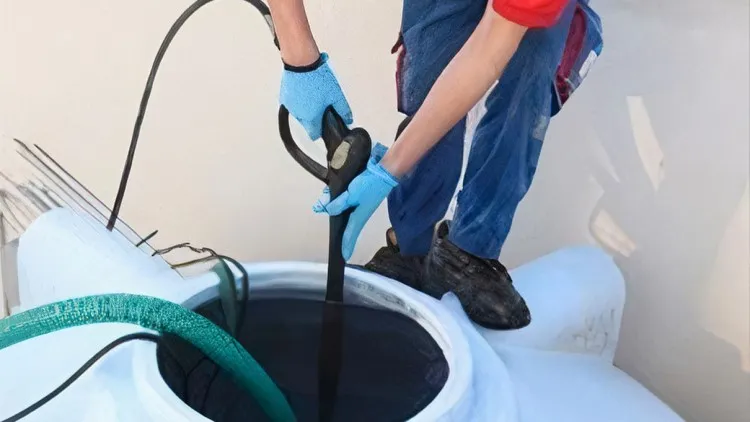
After the scrubbing process, the next step is high-pressure cleaning, which ensures that all loose dirt, sediment, and algae are fully removed. Professional cleaning companies use high-pressure water jets to rinse the tank thoroughly. The pressure helps dislodge particles that are stuck to the walls and floor.
Additionally, a vacuum extraction system is used to remove any remaining sludge, sediment, and debris from the bottom of the tank. This system ensures that the tank is completely free from contaminants, leaving it as clean as possible before disinfection.
Water Tank Disinfection
Once the tank is scrubbed and rinsed, it undergoes disinfection to kill any remaining bacteria, viruses, or fungi. The disinfection is a critical part of the process, as it helps ensure that the tank is not only clean but also safe for water storage.
The disinfection process involves:
- Applying safe disinfectants like chlorine (Sodium hypochlorite) or hydrogen peroxide, which are approved by the Municipality for drinking water treatment.
- Allowing the disinfectant to sit in the tank for a specified period to ensure it has time to kill harmful pathogens.
- Monitoring the chemical concentration ensures the proper level of disinfection is achieved without over-concentrating, which can leave harmful chemical residues.
Some companies also offer chemical-free disinfection options, such as UV sterilization or ozone treatment. These options are equally effective in killing bacteria and are considered eco-friendly alternatives.
Final Rinse and Drying
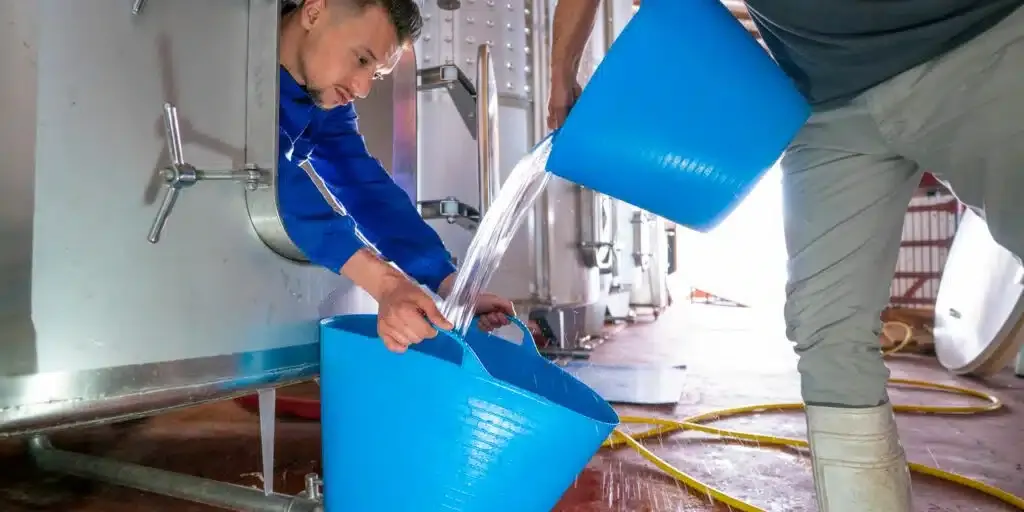
Once disinfection is complete, the tank is thoroughly rinsed with clean water to remove any residual chemicals. This ensures that no traces of chlorine or other cleaning agents remain in the tank. The rinsing process may involve multiple washes to ensure thorough cleansing.
After rinsing, the interior of the tank is dried completely. In some cases, this is done by using fans or natural drying methods, depending on the tank’s size and structure. Drying prevents the growth of mould or bacteria and ensures that the tank is fully prepared for refilling.
Refilling and Water Quality Testing
With the tank cleaned and dried, it’s time to refill the tank with fresh water. Before this, some service providers may take a water sample from the tank for quality testing, ensuring that no contaminants remain after cleaning and disinfection. The water is tested for key parameters such as:
- Chlorine levels to ensure safe drinking water
- pH balance to make sure the water is within safe acidity/alkalinity levels
- Microbial contamination to check for bacteria and viruses
In Dubai, it is common to provide a certification of compliance with health and safety standards upon completing the cleaning process.
Final Inspection and Reporting
Once the water tank has been cleaned, disinfected, and refilled, a final inspection is conducted to ensure the cleaning process has been carried out thoroughly. This inspection may also include verifying that the water tank is properly sealed and that all access points are secure.
At this stage, the cleaning company may issue a detailed report or certificate of cleaning, which may be required for regulatory compliance, especially in commercial and residential buildings.
By following this comprehensive process, your water remains safe, hygienic, and free from harmful contaminants. This regular cleaning helps to maintain optimal water quality and reduces the risk of waterborne diseases, providing you with peace of mind and safe drinking water for your family or business.
How to Choose Professional Water Tank Cleaning Services in Dubai
Choosing the best tank cleaning service is crucial for ensuring the safety and quality of your water. With so many providers available, it’s important to make an informed decision. Here’s a guide to help you choose a reliable and professional service:
1. Check Dubai Municipality Certification
Make sure the cleaning company is approved by the Municipality. This certification confirms that the company follows strict hygiene standards and uses safe cleaning methods that are approved for drinking water tanks.
2. Experience and Reputation
Look for a company with experience in tank cleaning. Take the time to read online reviews and testimonials to gauge customer satisfaction. A company with a good track record is more likely to deliver top-notch service.
3. Use of Approved Chemicals and Equipment
Ensure the company uses cleaning chemicals that are approved by the Municipality. They should also have modern equipment, including:
- Chlorine or hydrogen peroxide disinfectants
- High-pressure water jet sprayers
- Vacuum extraction systems
- Eco-friendly cleaning methods like UV sterilization or steam cleaning
4. Comprehensive Cleaning Process
A professional service should follow a detailed and thorough cleaning process. This includes:
- Initial inspection of the tank
- Draining and scrubbing the tank
- High-pressure washing
- Disinfection with safe chemicals
- Final rinsing and water quality testing
5. Water Testing and Compliance with Safety Standards
The best cleaning companies test the water after cleaning to make sure it’s free from contaminants. Ask if they provide a certification or report showing they’ve followed health and safety regulations.
6. Transparent Pricing and Service Packages
Make sure to request a detailed quote before hiring any company. Look for services with clear pricing and no hidden fees. Some companies also offer annual maintenance packages for regular tank cleaning, which can save you money in the long run.
7. Emergency Services and Customer Support
Choose a company that offers emergency cleaning services and strong customer support. A responsive team can quickly address any issues with your water tank and assist when you need it most.
By keeping these factors in mind, you’ll be able to select a reliable cleaning service that ensures your water remains safe and clean for your home or business.
Conclusion
Regular tank cleaning and disinfection are crucial for maintaining a safe and hygienic water supply in your home or business in Dubai. Over time, tanks can accumulate sediment, bacteria, and other contaminants, which can pose serious health risks. By opting for professional cleaning services, you ensure that your water remains clean, bacteria-free, and in line with Municipality standards.
When choosing a cleaning service, it’s important to select a certified company that uses approved cleaning chemicals, follows a thorough cleaning process, and provides water quality testing. With the right professionals on the job, you not only protect your family’s health but also extend the lifespan of your water storage system.