


Dubai’s humid, coastal climate makes AC essential year-round, but moisture, heat, and dust can quietly corrode evaporator coils, reducing cooling efficiency, raising electricity bills, and affecting indoor air quality. Many homeowners and professionals are unaware of this hidden problem, which can lead to costly repairs and health risks from rust and mold. This blog explores why corrosion occurs, how to spot early signs like rusted AC coils, the consequences of neglect, and professional solutions to save energy and maintain a safe, comfortable home.
1. Understanding Humidity-Caused AC Coil Corrosion
Dubai’s humid, coastal climate accelerates AC coil corrosion, as moisture reacts with the metal in evaporator coils, forming rust that reduces cooling efficiency. Unlike normal wear, rusted AC coils or evaporator coil rust can cause leaks, strange noises, and poor airflow. Regular AC coil cleaning and professional maintenance are key, as untreated corrosion not only impacts AC performance but can also affect indoor air quality and family health.
Why Corroded Evaporator Coils Happen in Dubai Homes
Dubai’s humid, coastal climate creates ideal conditions for metal oxidation, the chemical process that gradually corrodes AC coils. When moisture in the air combines with the metal surfaces of the evaporator coil, a slow electrochemical reaction occurs, forming rust. Over time, this corrosion weakens the coil, reduces cooling efficiency, and can lead to leaks or complete coil failure.
Even in well-maintained AC systems, high indoor humidity common during winter mornings and evenings or in seaside neighborhoods can accelerate the rusting process. Dust particles, combined with moisture, further stick to coil fins, creating small pockets where corrosion begins silently.
2. Evaporator Coil Rust vs. Rusted AC Coil
It’s important to distinguish between normal wear and rust-related corrosion:
- Normal Wear: Minor discoloration or dust buildup that does not affect AC performance.
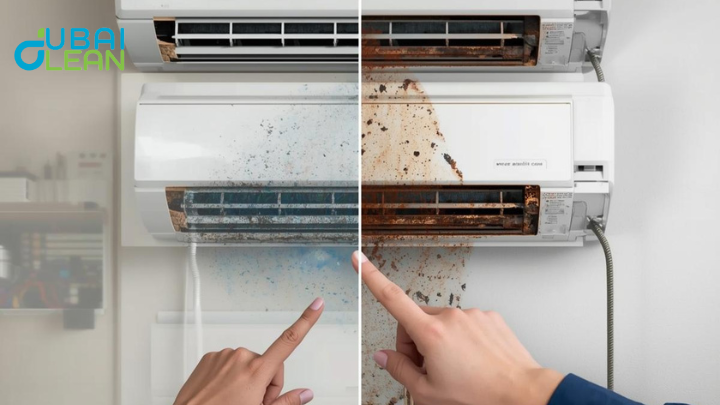
- Evaporator Coil Rust / Rusted AC Coil: Visible rust, pitting, or metal degradation that reduces airflow, causes unusual noises, and may even contribute to poor indoor air quality.
| Feature / Aspect | Evaporator Coil Rust | Rusted AC Coil |
| Definition | Rust formation specifically on the evaporator coil metal | Corrosion affecting the AC unit’s overall coil system, including evaporator and sometimes condenser coils |
| Symptoms | Reduced cooling efficiency, visible rust spots on coil fins | Strange noises, water leakage, higher electricity bills, overall poor AC performance |
| Health Impact | Can lead to mold and bacteria buildup locally | Can affect indoor air quality more broadly, causing allergies or respiratory issues |
| Detection | Easier to spot during inspection of the coil fins | May require professional inspection for full AC system |
| Solution | AC coil cleaning and preventive maintenance | Professional cleaning, corrosion treatment, and possible coil replacement |
The terms “corroded evaporator coil,” “rust evaporator coil,” “rust on evaporator coil,” and “rusted AC coil” all describe stages of this same underlying problem, but the severity varies depending on how long the coil has been exposed to humidity and dust.
3. Evaporator Coil Rust: Hidden Threat to Cooling Efficiency
Rusted AC coils, including a corroded evaporator coil or rust on evaporator coil, do more than just look unsightly they directly impact your AC’s ability to cool efficiently. As rust builds up, airflow is restricted and the system must work harder to maintain the desired indoor temperature. This extra strain can significantly increase electricity consumption, resulting in higher energy bills over time.
Ignoring early signs of rust, such as a rusted AC coil or evaporator coil rust, can lead to:
- Higher energy bills: AC uses more power to compensate for reduced efficiency.
- Frequent breakdowns: Corroded coils accelerate wear and tear on compressors and fans.
- Health risks: Mold and bacteria can grow on corroded coils, leading to poor indoor air quality, allergies, or respiratory issues for your family.
Preventive Tip: Schedule regular inspections with certified HVAC professionals in Dubai. Early detection of a rusted evaporator coil allows for timely cleaning, anti-corrosion treatment, or replacement, preventing costly repairs while maintaining optimal cooling and healthy indoor air.
4. Signs Your AC Has Rust on Evaporator Coil
Early signs of a rusted AC coil or evaporator coil rust include reduced cooling, unusual noises, water leaks, and musty or metallic odors. Visible rust on coil fins is a clear indicator of corrosion. Ignoring these signs can lead to higher energy bills, frequent breakdowns, and health issues from mold and bacteria, making timely professional inspection essential in Dubai’s humid climate.
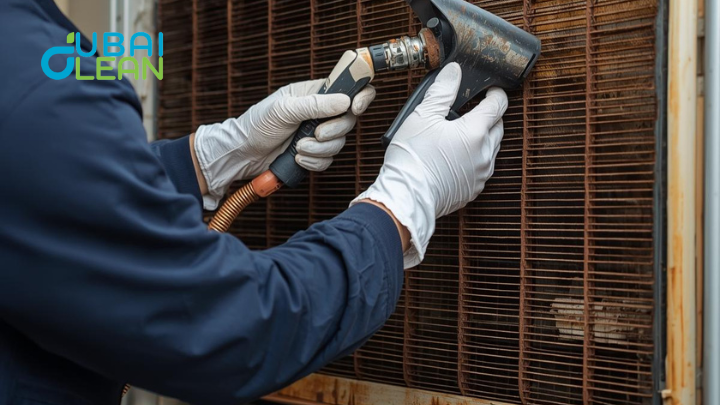
Rust Evaporator Coil: How to Detect Early Warning Signs
Recognizing early signs of evaporator coil rust or a rusted AC coil is crucial to prevent costly repairs and protect your family’s health. In Dubai’s humid environment, corrosion can develop silently, but several indicators can alert homeowners before severe damage occurs:
- Reduced Cooling Efficiency: Your AC may struggle to reach the desired temperature or take longer to cool rooms, as a corroded evaporator coil restricts airflow.
- Strange Noises: Buzzing, hissing, or gurgling sounds can indicate rust weakening the coil or causing blockages in the system.
- Water Leakage: Condensation may accumulate around the AC unit if rust damages the coil’s structure, leading to dripping or pooling water.
- Musty or Metallic Odor: A rusted AC coil can harbor mold or bacteria, producing unpleasant odors that affect indoor air quality.
- Visible Rust: During routine maintenance, trained professionals may spot rust on evaporator coil fins or discoloration that signals corrosion.
Health Impact:
Rust on evaporator coils is more than a mechanical issue it can impact your family’s health:
- Mold growth and bacteria on corroded coils can trigger allergies and respiratory issues.
- Prolonged exposure to rust particles and microbial contaminants can worsen asthma or other lung conditions, especially in children or elderly family members.
Preventive Tip: Regular inspection and professional AC Coil Corrosion in Dubai can identify rusted AC coils early, maintaining cooling efficiency, energy savings, and safe indoor air quality.
5. Risks & Consequences of Ignoring a Rusted AC Coil
Ignoring a rusted AC coil can lower cooling efficiency, increase electricity bills, and lead to costly repairs or system failure. In Dubai’s humid, coastal climate, corrosion accelerates, while dust and mold from corroded coils can harm indoor air quality and family health. Early professional maintenance is essential to protect both your home and budget.
Why Rust on Evaporator Coil Can Harm Your Health and Wallet
Ignoring early signs of rust on evaporator coils or a corroded AC coil can lead to both financial strain and health hazards. As corrosion worsens, your AC system loses efficiency, forcing it to work harder to cool your home. This translates into higher electricity bills and increased wear on critical components, eventually leading to expensive repairs or full replacement.
From a health perspective, corroded coils can harbor dust, mold, and bacteria, which are released into indoor air. Prolonged exposure may trigger allergies, respiratory issues, or exacerbate asthma, especially in children and elderly residents.
Long-Term Damage from a Rushed AC Maintenance Routine
Dubai’s coastal humidity accelerates corrosion, meaning even a small, unnoticed rust spot can rapidly develop into a major problem. Skipping regular professional inspections or relying on DIY cleaning can:
- Worsen evaporator coil rust, reducing AC efficiency over time.
- Lead to leakages, noisy operation, and system breakdowns.
- Increase the likelihood of health risks from mold and dust circulation.
Preventive Tip: Regular maintenance with certified HVAC technicians ensures early detection of rusted AC coils, protecting your home’s comfort, energy bills, and family health.
6. Professional Solutions for Corroded Evaporator Coil in Dubai
Certified HVAC professionals in Dubai can safely restore rusted AC coils and treat corroded evaporator coils using chemical-free cleaning and anti-corrosion methods. Regular inspections, timely cleaning, and preventive measures like seasonal maintenance and anti-rust coatings help maintain cooling efficiency, save energy, and protect indoor air quality, ensuring long-lasting AC performance in Dubai’s humid climate.
How Professionals Restore Rusted AC Coils Safely in Dubai
Certified HVAC technicians in Dubai provide expert solutions for rusted AC coils and corroded evaporator coils, ensuring your system’s efficiency and safety. During professional inspections, technicians identify early signs of corrosion, including rust on evaporator coil fins, pitting, and compromised metal surfaces.
Safe cleaning methods are applied, often chemical-free or with industry-approved treatments, to remove rust without damaging the coil. This process not only restores cooling efficiency but also prevents the release of harmful mold or dust particles, protecting indoor air quality and family health.
Preventive Steps to Avoid Evaporator Coil Rust in Coastal Homes
In Dubai’s humid, coastal climate, prevention is key. Professional services often include:
- Anti-corrosion coatings: Extend the life of AC coils and reduce the risk of future rust.
- Seasonal maintenance plans: Regular inspections during high-humidity months catch early signs of corrosion.
- Proper ventilation and humidity management: Helps prevent moisture buildup on coils.
Choosing local, certified HVAC providers ensures reliability, compliance with safety standards, and long-term protection for your AC system. By addressing corrosion proactively, you maintain optimal cooling, energy efficiency, and a healthy indoor environment.
7. Tips for Maintaining AC Coils in High-Humidity Dubai
To protect evaporator coils in Dubai’s humid climate, reduce indoor moisture with dehumidifiers or proper ventilation, schedule regular professional inspections, and keep AC settings energy-efficient. Seasonal cleaning and preventive treatments can prevent rusted AC coils, save on electricity bills, and maintain healthy indoor air for your family.
Simple Habits to Protect Your AC from Humidity Damage
Dubai’s humid climate accelerates corrosion on AC components, particularly evaporator coils. Simple preventive habits can help protect your system:
- Reduce Indoor Humidity: Use dehumidifiers or ensure proper ventilation to minimize moisture buildup around your AC coils.
- Regular Inspection and Cleaning: Schedule routine professional check-ups to identify rust on evaporator coils early, preventing further corrosion and maintaining efficient cooling.
- Monitor AC Performance: Keep an eye on temperature fluctuations, unusual noises, or musty odors, which may signal early signs of a rusted AC coil.
Energy-Saving Techniques for Rust Prevention on AC Coils
Maintaining AC efficiency not only prolongs coil life but also reduces electricity costs:
- Use Energy-Efficient AC Settings: Avoid running the AC at maximum capacity for long periods; this reduces strain on corroded coils and prevents rapid wear.
- Seasonal Maintenance: Cleaning or applying anti-corrosion treatments before humid months can protect your AC from long-term damage.
- Professional Preventive Care: Certified HVAC technicians in Dubai can apply rust inhibitors and check coil integrity, ensuring safe, long-lasting performance.
By adopting these habits, Dubai homeowners can minimize corrosion, save on energy bills, and maintain healthy indoor air quality.
Conclusion
Dubai’s humid, coastal climate makes AC coil rust a common issue, reducing cooling efficiency and affecting indoor air quality. Timely AC coil cleaning and maintenance through DubaiClean helps detect corrosion early, protects your family’s health, saves energy, and keeps your home or office comfortable year-round.